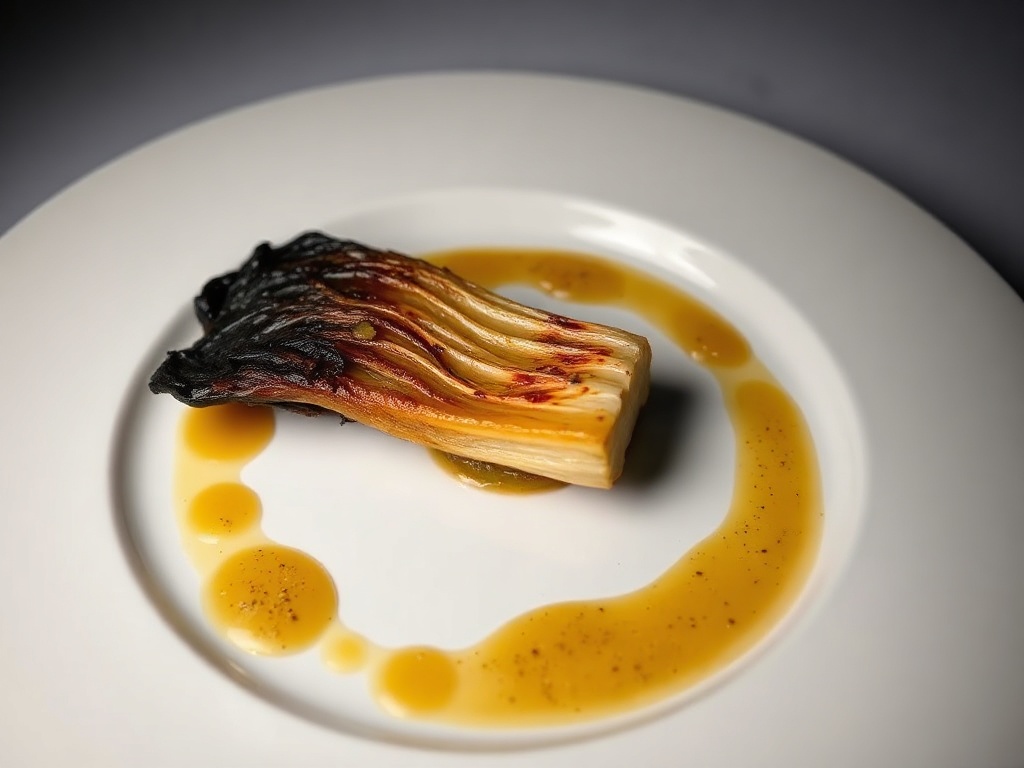
Charred Brassica with Anchovy Emulsion
A study in umami and texture: charred cabbage meets silky anchovy-based sauce. This simple dish celebrates the transformation that heat brings to humble vegetables.
Servings
4
Prep Time
10 min
Cook Time
15 min
Total Time
25 min
Ingredients
- Green or red cabbage1 headabout 1.5 lbs, cut into 1-inch thick wedges
- Good quality anchovies6-8 filletspacked in oil
- Garlic2 clovesminced
- Lemon1zest and juice
- Extra virgin olive oil½ cup
- Fleur de selto taste
- Cracked black pepperto taste
Method
Prepare the Cabbage
Cut your cabbage head into 1-inch thick wedges, leaving the core intact to hold everything together. Pat them dry with a kitchen towel—this is crucial for achieving a good char.
Heat the Pan
Get your largest cast iron skillet screaming hot over high heat. You want it almost smoking—this is what creates the caramelized crust we're after.
Sear the Cabbage
Working in batches if necessary, place the cabbage wedges cut-side down in the hot pan. Don't move them for 4-5 minutes. Flip and char the other side for 3-4 minutes.
Make the Emulsion
While the cabbage cooks, combine anchovies, minced garlic, and lemon zest in a mortar and pestle (or small bowl). Mash into a paste. Slowly whisk in the olive oil to create an emulsion.
Finish and Serve
Transfer the charred cabbage to a serving platter. Drizzle generously with the anchovy emulsion. Finish with a squeeze of fresh lemon juice, fleur de sel, and cracked pepper.
Chef Notes
🔪 Technique: On Anchovies
Don't let the word scare you. Quality anchovies add depth without fishiness—they're essentially a savory umami bomb. If you're sensitive, use just 4-5 fillets.
💡 Tip: Room Temperature Serving
This dish is actually wonderful served at room temperature the next day. The flavors meld and the emulsion becomes even silkier. Consider making it ahead.
🔄 Substitution: Vegetable Swaps
This technique works beautifully with other cruciferous vegetables: broccoli, cauliflower, Brussels sprouts, or even radicchio. Keep the char, adjust cooking time.
🔪 Technique: The Science
The anchovy paste emulsifies into the olive oil through lecithin in the anchovies. Without the anchor ingredients (pun intended), you get a separated vinaigrette. With them, you get sauce.